
7 World Cup 2026 Mistakes Bettors Make
The 2026 FIFA World Cup will be the first men’s World Cup with 48 teams, hosted across Canada, Mexico, and the United States from June 11 to July 19, 2026. Tactical Review tracks the official schedule, 104 matches, 16 host cities, qualification context, team form, player statistics, and market movement for fans and bettors across North America and global markets. The tournament opens at Estadio Azteca in Mexico City, while the final is scheduled for MetLife Stadium in New Jersey. The group stage contains 12 groups of four, with the top two teams and eight best third-place teams advancing to a 32-team knockout bracket. That structure creates more matches, longer travel routes, and additional opportunities for mispriced odds. Check host conditions, rest days, confirmed lineups, and market rules before placing any World Cup 2026 wager.
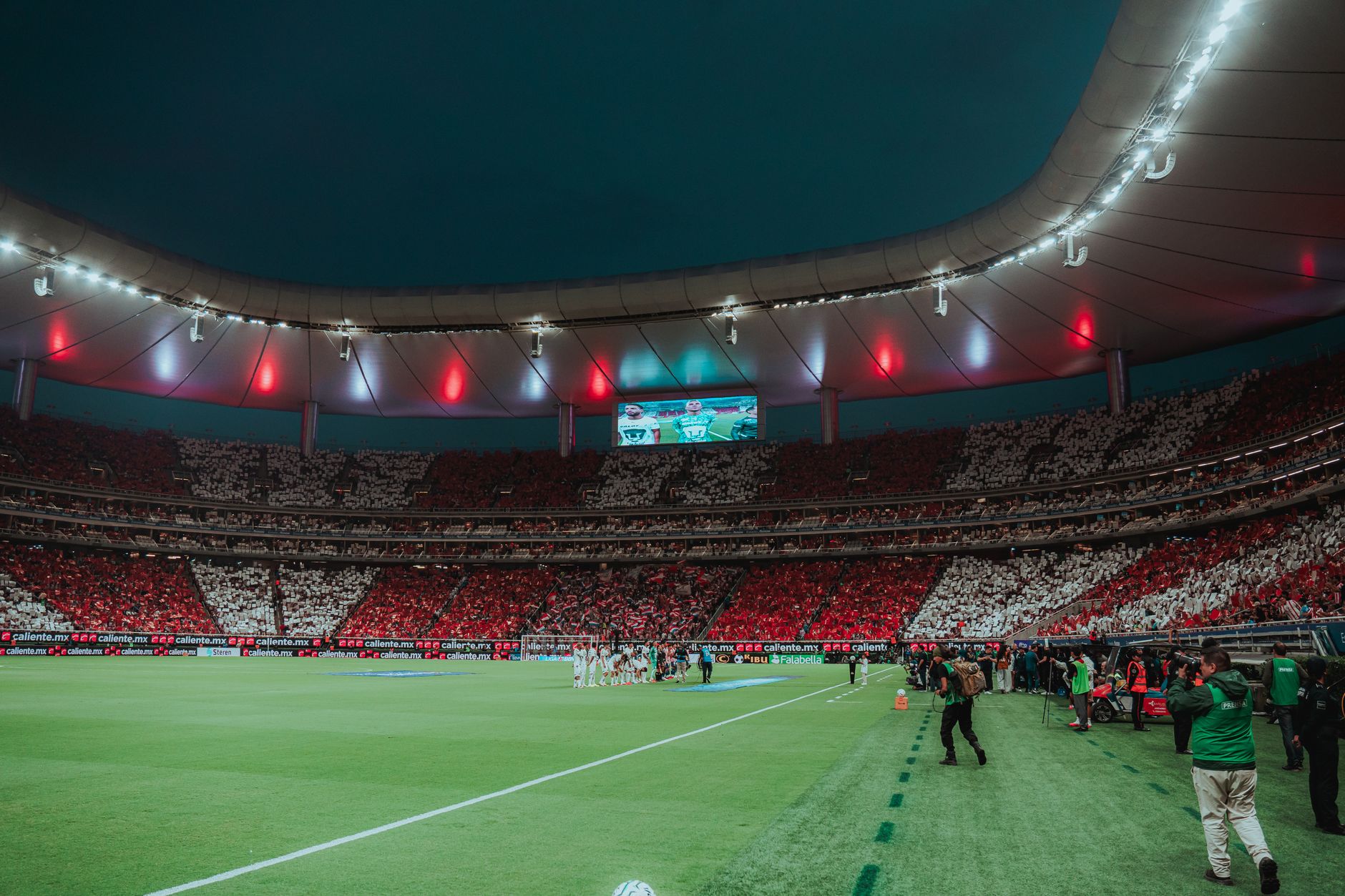
Photo by Santiago Sauceda González on Pexels
Want the tournament framework without the usual noise? Tactical Review treats the World Cup schedule as an operating document, not decorative wallpaper.
Before 2025: how did World Cup schedules work?
Before 2025, FIFA World Cup schedules generally used 32 teams divided into eight groups of four, producing 64 matches across roughly one month. The top two teams from each group advanced directly to the round of 16, so every group match carried clear qualification pressure and third-place scenarios did not exist.
That older structure made schedule analysis relatively tidy. A bettor could compare three group fixtures, calculate six possible points, and study head-to-head implications without needing a spreadsheet worthy of a small bank. The 2018 FIFA World Cup in Russia and the 2022 FIFA World Cup in Qatar both used the 32-team model, although Qatar introduced an unusual November-December calendar because of extreme summer heat.
The 2026 edition is materially different. FIFA expanded the field after approving the 48-team format, and the competition now contains 12 groups of four. The first two teams in each group qualify, alongside the eight strongest third-place teams. That means a team can survive with fewer points than before, but the ranking criteria become more complicated. Goal difference, goals scored, disciplinary records, and formal competition regulations can become relevant.
According to FIFA’s official 2026 World Cup overview, the tournament will include 104 matches. The 2022 FIFA World Cup regulations illustrate how ranking and disciplinary procedures can affect tournament outcomes, although readers should consult the final 2026 regulations when published.
A practical historical comparison looks like this:
- 32 teams: 64 matches and eight groups in the traditional format.
- 48 teams: 104 matches and 12 groups in the 2026 format.
- Knockout entry: 16 teams previously; 32 teams in 2026.
- Host footprint: one host country in most earlier editions; three countries in 2026.
- Travel profile: concentrated logistics previously; major cross-border distances now.
The first mistake is assuming that the old numbers still apply. They do not. Anyone still thinking in “eight groups, 64 matches, direct round of 16” terms is not analyzing World Cup 2026; they are nostalgically betting on 2022 wearing a new shirt.
To deepen the format comparison, review our [Internal Link: World Cup tournament format guide] before assessing futures or group markets.
What is the 2026 shift, and why does it matter?
The 2026 shift is the expansion to 48 teams, 12 groups, 104 matches, and a 32-team knockout stage across Canada, Mexico, and the United States. It matters because qualification paths, travel demands, match volume, and third-place calculations all change how teams and markets should be evaluated.
The three host nations receive automatic qualification: Canada, Mexico, and the United States. Mexico will stage matches in Mexico City, Guadalajara, and Monterrey; Canada will use Toronto and Vancouver; the United States will host matches in 11 cities, including Atlanta, Boston, Dallas, Houston, Kansas City, Los Angeles, Miami, New York/New Jersey, Philadelphia, San Francisco Bay Area, and Seattle. FIFA uses official venue names and match assignments, so bettors should check current listings rather than trust copied social posts.
The schedule creates several analytical traps:
- Distance is not a cosmetic variable. A team traveling between Vancouver and Miami faces a very different logistical problem from a team staying within one region.
- Climate varies sharply. Mexico City’s altitude, Monterrey’s heat, Seattle’s conditions, and East Coast humidity are not interchangeable.
- The third-place route changes incentives. Some teams may prioritize goal difference, while others may manage energy once four points appears sufficient.
- The bracket is larger. More knockout matches create additional uncertainty and more chances for injuries, suspensions, and tactical adaptation.
- Kickoff times matter. Local start times can affect recovery, television conditions, and player routines.
The United States Soccer Federation and national associations will publish team preparation details, but official squad information will evolve until FIFA registration deadlines. “Official schedule” is therefore not a single frozen graphic; it is a living source that can reflect venue operations, broadcasting requirements, and confirmed match information.
A second mistake is treating the host label as one broad home advantage. The United States is not one climate, one travel corridor, or one stadium environment. Canada, Mexico, and the United States provide a continental tournament footprint, not a single familiar home venue.
See the wider venue picture before making a selection.
What changed for players and bettors?
Players and bettors now face a tournament with more fixtures, more qualification combinations, and greater regional variation. The most important change is not merely the 48-team headline; it is the interaction between schedule density, travel, squad depth, match incentives, and market timing.
For players, the 2026 competition may reward teams with dependable rotation options. A starting XI can look excellent in its opening game and less convincing after two long-haul transfers, a high-intensity match, and a short recovery period. Coaches must balance qualification urgency against the need to preserve key players for the knockout stage.
For bettors, the most expensive error is often premature certainty. Pre-tournament futures markets can be attractive, but they are built before final squads, injuries, tactical roles, and group draws are fully understood. A favorite priced at 5.00 before the draw may become less appealing after receiving a difficult travel sequence, while a less fashionable team can gain value from a compact regional schedule.
Tactical Review’s preferred workflow is deliberately stubborn:
- First, verify the fixture. Confirm date, venue, local kickoff, and competition stage through FIFA or the relevant federation.
- Then, assess the team. Review recent form, expected goals, defensive transitions, set pieces, goalkeeper availability, and squad depth.
- Next, adjust for location. Add travel, altitude, heat, humidity, surface, and rest-day considerations.
- Finally, compare the market. Look across licensed providers, record the price and timestamp, and avoid treating a single number as universal truth.
This is where responsible betting discipline matters. The National Council on Problem Gambling recommends setting limits before wagering and treating gambling as entertainment rather than income. That is not glamorous copy. It is useful copy. Set a budget, avoid chasing losses, and never use borrowed money.
The third mistake is believing that more World Cup matches automatically means more easy opportunities. More matches mean more information, but they also mean more noise, more correlated assumptions, and more ways for a small data error to multiply.
How should the World Cup 2026 schedule be read?
The World Cup 2026 schedule should be read in layers: tournament stage, group position, venue, travel distance, rest interval, and market timing. A fixture list alone tells you who plays whom; it does not tell you how difficult the surrounding conditions may be.
Start with the group stage. Each team plays three matches, but qualification is no longer limited to the top two. The eight best third-place teams advance, making table projections less binary. A team with four points may qualify comfortably, while a team with three points may need a positive goal difference or favorable results elsewhere.
Then inspect the knockout route. The round of 32 gives 32 teams a chance to continue, but it also adds a high-pressure match that did not exist in the 32-team era. In a traditional World Cup, a strong group winner moved directly to the round of 16. In 2026, even teams finishing first may need to negotiate an additional knockout fixture before reaching the quarterfinals.
A useful schedule worksheet should record:
- Match date and local kickoff time.
- Venue and host city.
- Previous match location.
- Number of rest days.
- Estimated travel direction and duration.
- Temperature, humidity, or altitude concerns.
- Suspended, injured, or rested players.
- Current outright, group, match, and total-goal prices.
- Whether the provider settles a market under 90 minutes only or includes extra time.
That final line is a wonderfully boring detail, which is exactly why it matters. A match-winner market can mean different things depending on whether a provider settles after regulation, extra time, or penalties. Rules vary by market and operator. Read them before betting, not after a penalty shootout has emptied your patience.
A practical information gain point: schedule difficulty should not be scored only by kilometers. A 1,500-kilometer flight with two full recovery days may be less damaging than a shorter transfer followed by a late kickoff, high humidity, and limited training time. Distance is measurable; recovery quality is the variable that often gets ignored.
Review our [Internal Link: World Cup betting market glossary] for settlement terms, draw-no-bet rules, handicaps, and totals.

Photo by https://kaboompics.com/ on Pexels
What does the expanded format mean for predictions?
The expanded format means predictions should focus less on reputation and more on scenario ranges. A single projected table is fragile because third-place qualification creates several possible advancement thresholds, while the 32-team knockout stage increases the number of elimination points.
A sensible prediction model should begin with team strength but refuse to end there. Elo ratings, FIFA rankings, recent expected-goal performance, opponent quality, and player availability can establish a baseline. However, baseline strength should be adjusted for the venue and schedule. Brazil, France, Argentina, England, Germany, Spain, and Portugal may remain prominent contenders, but reputation is not a substitute for confirmed lineups or a favorable route.
Three errors appear repeatedly:
- Overweighting FIFA rankings: rankings summarize past results but do not capture every current tactical change.
- Ignoring squad construction: a team with two elite attackers may still lack a reliable defensive midfielder or second-choice fullback.
- Confusing a strong group with a strong tournament path: winning a group does not guarantee an easy round of 32, round of 16, or quarterfinal route.
A contrarian but defensible conclusion follows: the 2026 World Cup may offer more value in selective match markets than in early outright markets. The field is larger, the competition contains more teams with uneven international experience, and public money will likely concentrate on famous nations. That does not make underdogs automatically attractive. It means price discipline becomes more important than badge recognition.
Tactical Review can support this process with match predictions, tactical notes, player statistics, and tournament coverage. Still, no preview removes uncertainty. Football remains a low-scoring sport in which one deflection, red card, or goalkeeper error can ruin a beautifully arranged model.
If you want to track the competitive details rather than headline narratives, start with the latest data.
What this means now for World Cup 2026 analysis?
Now, World Cup 2026 analysis should be organized around verified information, changing probabilities, and controlled exposure. The tournament begins on June 11, 2026, and concludes on July 19, 2026, but the useful research begins well before the opening match.
First, build a source hierarchy. FIFA should lead for tournament regulations, match assignments, and official competition information. National federations should lead for squad announcements and injury updates. Reputable providers and established media can help with prices, but screenshots without timestamps are weak evidence.
Then separate three kinds of judgment:
- Fact: France is scheduled for a particular fixture at a named venue.
- Inference: the travel sequence may affect recovery.
- Opinion: a market price does not adequately reflect that effect.
Keeping those categories separate prevents confident nonsense from dressing itself as analysis. It also makes your records auditable, which is a surprisingly expensive habit to avoid when markets move quickly.
Second, monitor changes in stages. Before the draw, use broad team-strength data. After the draw, study groups and travel corridors. After squad announcements, update player availability and tactical roles. During the tournament, use confirmed lineups, rest, and match-state information. A forecast created six months before kickoff should not be treated as sacred simply because it is written in a confident font.
Third, establish a personal risk framework. Decide the maximum amount you can afford to lose across the tournament, set a per-bet limit, and avoid increasing stakes to recover a previous result. Odds are probabilities expressed through prices; they are not promises. Even a selection with positive expected value can lose, and short-priced favorites can fail more often than casual bettors imagine.
For additional context, consult our [Internal Link: responsible World Cup betting guide] and keep your research separate from emotional support for a favorite. Argentina, Brazil, England, France, Germany, Spain, and the United States will attract passionate attention. Passion is welcome. It is not a pricing model.

Photo by El gringo photo on Pexels
What are three predictions for the next quarter?
The next quarter should bring three important developments: more concrete schedule information, sharper squad narratives, and greater market differentiation between public favorites and analytically supported selections. These are directional predictions, not guarantees, and they should be revised when FIFA or national federations publish new details.
Prediction one: schedule-based analysis will become more valuable. Once match assignments, kickoff times, and venue details receive wider attention, teams with difficult travel chains may be priced more accurately. The edge will not come from simply counting kilometers; it will come from combining travel with rest days, climate, altitude, and rotation capacity.
Prediction two: squad depth will separate contenders. With a 32-team knockout route and a long tournament calendar, coaches may need 16 or more trusted contributors. Teams dependent on one striker, one creator, or one center-back pairing could become vulnerable after injuries or suspensions. Player statistics should therefore be viewed in role context rather than as isolated goals and assists.
Prediction three: the best opportunities may appear after public overreaction. A dramatic opening result can move prices more than underlying performance deserves. A narrow win with poor chance creation is not automatically evidence of dominance; a defeat after a red card is not automatically evidence of collapse. Tactical Review will focus on repeatable signals, including shot quality, field tilt, pressing efficiency, set-piece threat, and lineup continuity.
A disciplined quarter-by-quarter plan looks like this:
- Record the official fixture and source.
- Compare at least three market prices where legally available.
- Note the timestamp and settlement rules.
- Recheck injuries and starting roles.
- Set a stake before the emotional part begins.
- Stop when the predetermined budget is used.
The fourth mistake is assuming prediction quality means prediction certainty. Professional analysis is not a crystal ball with better typography. It is a process for making less careless decisions under incomplete information.
Frequently Asked Questions
Q: What is the World Cup 2026 format?
A: The World Cup 2026 format includes 48 teams, 12 groups of four, and 104 matches across Canada, Mexico, and the United States. The top two teams in each group qualify for the knockout stage, along with the eight best third-place teams. The knockout competition begins with a round of 32, followed by the round of 16, quarterfinals, semifinals, and final. This format creates more matches and more qualification scenarios than the 32-team system used at the 2018 FIFA World Cup and 2022 FIFA World Cup.
Q: When does the 2026 FIFA World Cup start and finish?
A: The 2026 FIFA World Cup is scheduled to start on June 11, 2026, and finish on July 19, 2026. The opening match is planned for Estadio Azteca in Mexico City, while the final is scheduled for MetLife Stadium in New Jersey. Match times and venue assignments should be verified through FIFA because official tournament information can be updated. Travelers should also check local time zones, accommodation demand, and cross-border transport requirements before booking.
Q: How do I analyze World Cup 2026 betting markets?
A: Analyze World Cup 2026 betting markets by checking the official fixture, confirmed venue, team availability, tactical matchup, travel conditions, rest days, and settlement rules. Compare prices across licensed providers and record the odds with a timestamp because markets move after injuries, lineup news, and public betting pressure. Begin with match facts, then estimate likely scenarios, and finally decide whether the price justifies the risk. Never treat a prediction as a guaranteed result or stake money you cannot afford to lose.
Q: What is the difference between World Cup 2026 outright bets and match bets?
A: An outright bet predicts a tournament-level outcome, such as the winner, finalist, or group winner, while a match bet concerns one fixture. Outright markets can remain open for months and are strongly affected by the draw, injuries, and knockout path. Match markets usually provide more immediate information, including confirmed lineups and current form, but they can also be more volatile. Always read the provider’s rules for extra time, penalties, abandoned matches, and postponed fixtures.
Q: Why might the 2026 World Cup schedule affect team performance?
A: The 2026 schedule may affect performance because teams will travel across three countries with different climates, altitudes, time zones, and stadium environments. A squad moving between Vancouver, Mexico City, Miami, or Seattle may face different recovery demands than a squad playing within one regional corridor. Rest days and rotation capacity can become especially important during the knockout phase. Analysts should evaluate travel as part of a wider workload model rather than using distance alone.
Q: How much money should I budget for World Cup 2026 betting?
A: Your World Cup 2026 betting budget should be an entertainment amount that you can lose without affecting rent, bills, debt payments, or essential savings. Set a total tournament limit before kickoff, divide it into small predetermined stakes, and avoid increasing the amount after a losing result. There is no universally safe percentage or guaranteed return. The National Council on Problem Gambling recommends practical limits and support resources, and responsible operators should provide deposit, loss, and time controls.
Q: What should I do if a World Cup 2026 prediction fails?
A: If a World Cup 2026 prediction fails, record the result, review the original assumptions, and do not immediately chase the loss with a larger wager. Separate bad process from bad outcome: a well-supported selection can lose, while a careless selection can win. Check whether the failure came from an injury, red card, tactical change, market movement, or flawed probability estimate. Then update your model only when the evidence supports a change, rather than reacting to one dramatic match.
Tactical Review will continue covering the 2026 FIFA World Cup through schedule updates, tactical breakdowns, match predictions, and player statistics. Use the information carefully, verify the official details, and keep your decisions within a firm personal limit.
Ready to follow the tournament with a sharper process?